Search
Search all editorial content on the website of the Storting.

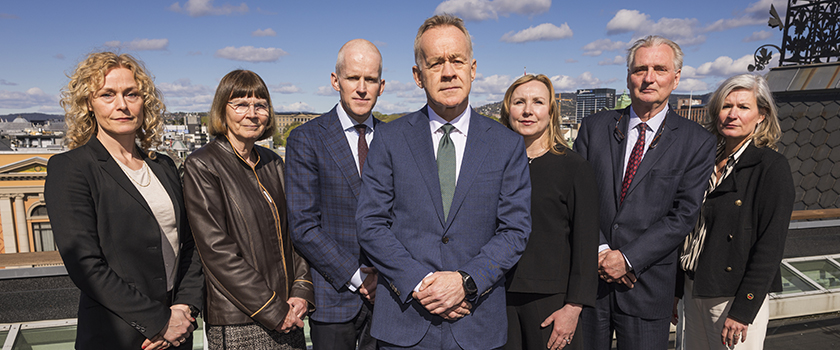
Commission of enquiry, from left to right: Sunniva Engh, Toril Johansson, Hugo Munthe Kaas, Amund Djuve (chair), Kjersti Buun Nygaard (vice chair), Axel Wernhoff and Pia Therese Jansen. Photo: Storting
The commission of enquiry which has been set up after the publication of the Epstein files met for the first time on Tuesday 5th May 2026.
“It was a good meeting. Among other things, we went through our terms of reference and how we would structure our work in the time ahead,” said Amund Djuve, the chair of the commission.
On 15th April this year, the Storting resolved to appoint a commission of enquiry to look into the questions that had been raised through the publication of the Epstein files.
“The commission’s principal task is to understand how the authorities handled, and should have handled the risks that the Epstein files have disclosed. We will also work to establish a coherent and verifiable picture of whether the relationships, practice and systems within the Norwegian authorities have created vulnerabilities to undue influence or other improper practices,” said Mr Djuve.
The commission of enquiry is due to submit its final report to the Storting by 31st January 2028. It can also submit interim reports to the Storting as it deems appropriate.
“We will carry out our work thoroughly and systematically. Our aim is to compile the necessary documents, and interview those people who will be able to enlighten the topics over a period that stretches back more than 30 years – to the 1993 Oslo Accords. That said, we approach our task with no preconceived conclusions, and with full respect for the need to establish all the facts before any assessment can be made,” added the commission’s chair.
The commission comprises the following seven members: Amund Djuve (chair), Kjersti Buun Nygaard (vice chair), Hugo-A. B. Munthe Kaas, Pia Therese Jansen, Sunniva Engh, Axel Wernhoff and Toril Johansson.