Search
Search all editorial content on the website of the Storting.

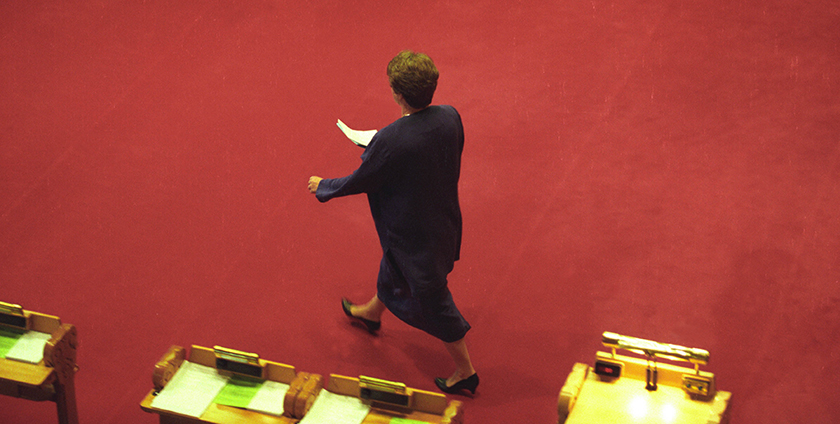
Gro Harlem Brundtland in the Storting Chamber on 23rd October 1996. Photo: Rolf Øhman/Aftenposten/NTB
Wednesday 23rd October 1996 was to be a groundbreaking day in the history of the Norwegian Parliament. For the first time ever, Oral Question Time would be held in the Storting Chamber.
But events were to take an unexpected turn when Prime Minister Gro Harlem Brundtland shocked those present by announcing her resignation.
“Honourable President! I have asked today to make an announcement to the Storting. We are now heading towards a new parliamentary election and a new four-year term. I believe that it is right that the Government’s leadership and composition be settled well in advance of the election. With this in mind, I have notified the King that I will tender my resignation at the meeting of the Council of State on Friday,” said the then Prime Minister when she took to the podium before a packed Chamber and press box.
“It is the President’s view that in light of the announcement the Prime Minister has just made the Storting should postpone the remainder of today’s business, and proposes that the sitting be adjourned,” said then President of the Storting Kirsti Kolle Grøndal.
It wasn’t until Wednesday 4th December 1996 that Oral Question Time was finally held. The first question went to the new Prime Minister, Thorbjørn Jagland.
Question Time was introduced as a trial scheme in 1949, and became a permanent fixture from 1950 onwards. Oral Question Time, in which government ministers have no idea what the questions are in advance, was introduced on a temporary basis in 1996. The aim was to make the Storting a more relevant and lively arena for political debate and scrutiny of the Government.
In 1997, the Storting’s Presidium’ concluded that Oral Question Time had “worked as intended,” and the arrangement was continued.
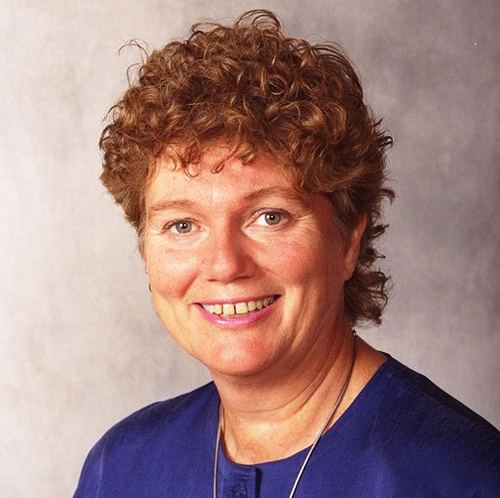
Kirsti Kolle Grøndahl. Photo: Storting.
30 years on, and Oral Question Time is now firmly embedded in parliamentary life. But what recollections does then President of the Storting, Kirsti Kolle Grøndahl, of October 1996?
“First of all: I’m actually a bit disappointed that it’s called “Oral Question Time” and not “Spontaneous Question Time”, because the latter is a better description of what it was intended to be. What’s more, in my view there are far too many pre-written questions,” said the former President.
She explains how Oral Question Time came about:
“The Storting wanted to have more relevant and topical debates in the Storting Chamber – the kind of debate that took place on TV, on the radio and in the rest of the media; in fact, everywhere else but in the Chamber. We also wanted to move more of the political discussions that took place in the corridors into the Chamber and, hence, into the public eye. There was a clear democratic principle here.”
Ms. Kolle Grøndahl vividly recalls the day the first Oral Question Time was going to take place.
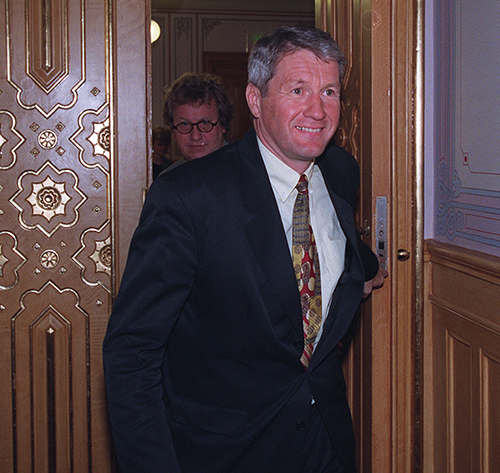
Thorbjørn Jagland appeared just before the start of the sitting in the Storting. Photo: Bjørn Sigurdsøn/NTB.
“At around nine thirty, Gro came into my office. She wasn’t registered as one of the ministers who was going to take part in Question Time, so I was somewhat surprised. It was then she told me she was going to step down. Gro also asked me if I knew where Thorbjørn Jagland was, because it was he who was earmarked as her successor. He arrived in the end, just a few minutes before Oral Question Time was due to begin at 10 o’clock,” she says.
Harald Grønn, head of the Storting’s Chamber Secretariat at the time, had no idea that Gro was going to announce her resignation.
“I just sat there dumbfounded. If memory serves me right, NRK went off-air for a couple of minutes after Gro resigned, in shock and disbelief,” he says.